Final Solution: Catalyst Platform Architecture
Catalyst is decentralized trust infrastructure addressing the thirty two point two billion naira financing gap facing Nigeria’s micro, small, and medium enterprises. The platform leverages Cardano blockchain technology to create transparent, auditable investment mechanisms while replacing traditional physical collateral requirements with verifiable digital trust metrics.
This solution emerged from extensive community research and ground truth discovery, where we identified systemic barriers excluding entrepreneurs from formal financial systems.
Core Innovation: The Two Path Trust System
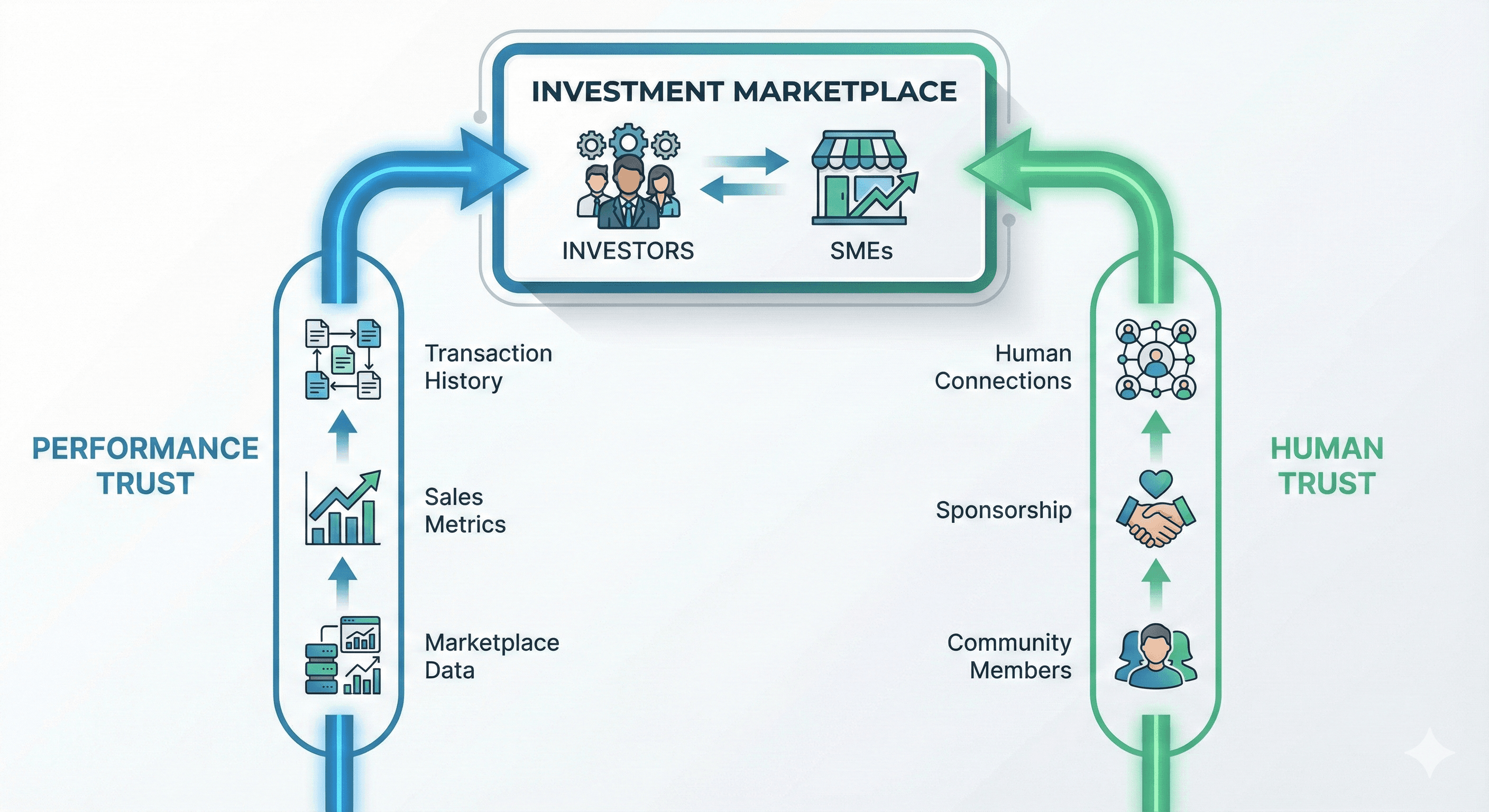
Our fundamental architectural innovation recognizes that trust can be constructed through multiple valid pathways rather than imposing single gatekeeping mechanisms that exclude most economic actors. This insight came from analyzing patterns in our research that revealed how traditional finance systematically excludes viable businesses.
Performance Trust targets SMEs with existing marketplace presence and transaction history. The system integrates with e-commerce platforms, payment processors, and marketplace APIs to extract verifiable data about business operations. Every sale, customer review, delivery confirmation, and repeat purchase feeds into a reputation engine that quantifies reliability. This creates digital business history more comprehensive and tamper resistant than traditional credit reports, updated in real time rather than quarterly, and accessible to all potential investors rather than gatekept by credit bureaus.
Human Trust addresses aspiring entrepreneurs who possess business plans, skills, and market opportunities but lack transaction history. The pathway enables community members with established reputations to sponsor individuals they believe in, effectively providing human collateral. Agents receive five percent commission on profits generated by sponsored businesses, creating natural quality control where sponsors must genuinely assess potential and provide ongoing support rather than simply collecting fees.
These dual pathways directly address our core hypothesis that trust can be constructed through multiple valid mechanisms beyond traditional collateral.
Both pathways feed into unified investment marketplace where capital providers browse funding opportunities, review trust metrics, and deploy capital across multiple currencies with complete transparency into allocation and returns.
This architecture was selected after evaluating multiple solution approaches and determining the optimal balance between innovation and feasibility.
Technical Architecture Overview
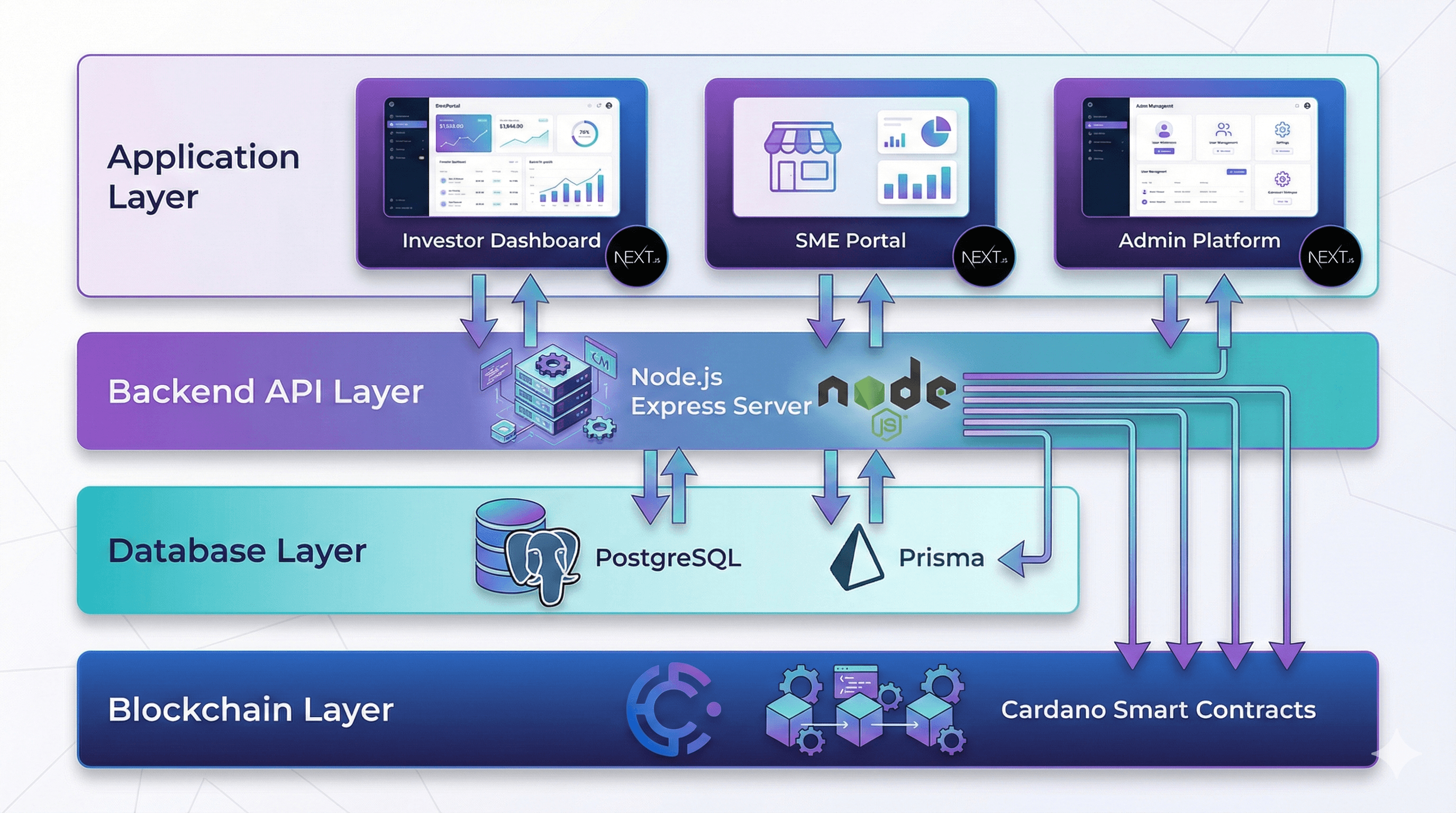
Catalyst employs microservices architecture organized into distinct application layers with specific responsibilities and clear interfaces. This separation enables independent scaling of components, isolated testing, and flexibility in technology choices while maintaining system coherence through well defined APIs.
The Application Layer consists of three Next.js 14 web applications. The Investor Dashboard prioritizes portfolio tracking, opportunity discovery, and multi currency wallet management with interfaces optimized for investment decision making. The SME Portal emphasizes mobile responsiveness since most Nigerian entrepreneurs access digital services via smartphones, with simplified navigation for funding request creation and profit reporting. The Admin Platform provides operational dashboards with data visualization, batch processing interfaces, and monitoring tools for platform oversight.
All three applications communicate with backend exclusively through RESTful HTTP requests, maintaining clean separation between presentation logic and business logic. This architecture enables future development of mobile applications or third party integrations that consume the same API endpoints.
The Backend API Layer is Node.js Express application providing unified business logic for all platform operations. The backend handles authentication via JWT tokens, enforces authorization rules through middleware, manages database transactions through Prisma ORM, coordinates blockchain interactions through Blockfrost API, and provides external service integrations for exchange rates, file uploads, and notifications.
The Database Layer uses PostgreSQL for persistent storage with Prisma ORM providing type safe database access and automated migration management. The schema implements relational data modeling with foreign key constraints, indexes on frequently queried fields, and transaction support for multi table updates requiring atomicity. All financial amounts store as BigInt in smallest currency units to avoid floating point arithmetic issues.
The Blockchain Layer integrates with Cardano’s preprod testnet through Blockfrost API. Smart contracts written in Aiken implement investment escrow logic, ensuring funds lock on chain until predefined conditions trigger release. The architecture maintains clear separation: blockchain handles custody and transfer of crypto assets while PostgreSQL records investment metadata, calculates profit distributions, and tracks payment schedules.
Multi Currency Investment Infrastructure
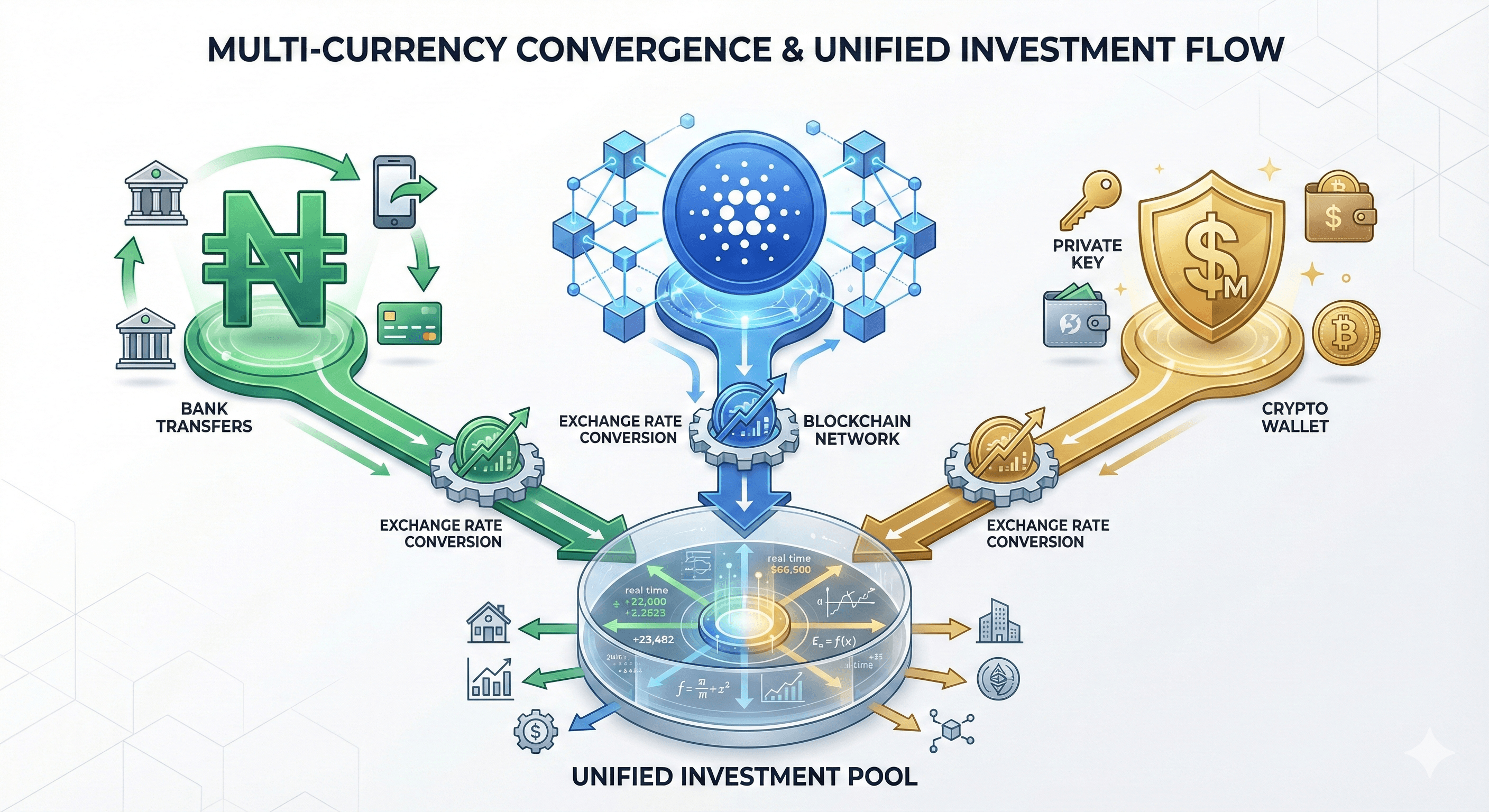
Supporting investment across multiple currencies requires sophisticated backend infrastructure managing exchange rates, handling blockchain transactions, and ensuring fair profit distribution regardless of currency used.
For Nigerian Naira investments, the platform operates NGN denominated wallets for all users. Investors deposit funds via bank transfer or local payment methods into platform wallet. When they invest in funding request, system deducts from wallet balance, transfers to SME wallet, creates investment records, and updates funding request status within atomic database transaction ensuring consistency. SMEs withdraw NGN balances to bank accounts through platform withdrawal interface.
Cardano ADA and USDM stablecoin investments follow different flow due to decentralized nature of blockchain assets. The platform never takes custody of crypto funds. Users maintain assets in personal wallets like Nami, Eternl, or Flint. When investor wants to fund request with ADA, system generates transaction parameters for locking funds in on chain escrow contract. Investor signs transaction using wallet application, broadcasting to Cardano blockchain. Upon blockchain confirmation, investor submits transaction hash to platform confirmation endpoint, which records investment in database and releases funds from escrow when conditions are met.
Exchange rates update in real time from trusted sources: CoinGecko API for ADA to NGN rates and ExchangeRate API for USDM to USD to NGN conversions. All financial values store in smallest currency units, kobo for NGN and lovelace for ADA, to maintain precision. System converts all investment amounts to NGN equivalent for profit distribution calculations, ensuring investors receive proportional returns regardless of which currency they used.
The Four Way Split Profit Distribution
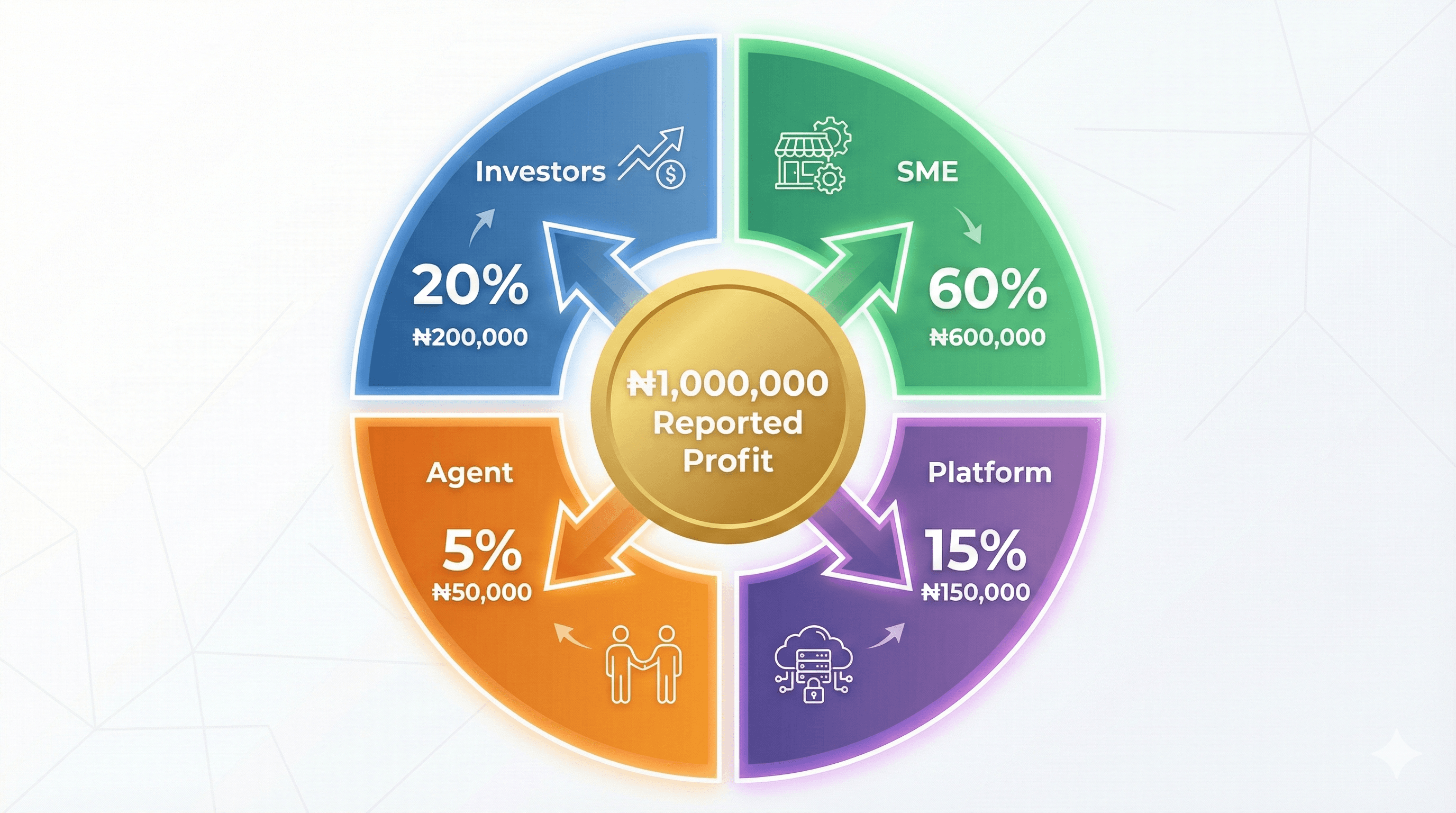
Catalyst’s revenue model distributes value across four stakeholder groups rather than extracting maximum profit for single entity. This structure creates network effects where each participant’s success depends on collective ecosystem health.
When SME reports profits for installment period, the distribution algorithm executes specific sequence. Consider concrete example: SME received five hundred thousand naira in funding with twenty percent profit sharing terms and reports one million naira in profits.
The system calculates gross lender share as reported profit multiplied by profit share percentage, producing two hundred thousand naira. Platform charges investors ten percent fee on gross returns, extracting twenty thousand naira as service fee. Net lender share of one hundred eighty thousand naira distributes proportionally among all investors based on contribution percentages.
SME retains gross share of eight hundred thousand naira after lender allocation. Platform charges SMEs twenty percent fee on retained profits, extracting one hundred sixty thousand naira. If SME was sponsored through Human Trust pathway, Agent receives five percent commission on SME gross share, forty thousand naira. SME receives net share of six hundred thousand naira after platform fee and agent commission.
Total platform revenue of one hundred eighty thousand naira splits with ten percent flowing to Risk Mitigation Fund designed to handle defaults or disputes, producing eighteen thousand naira allocation. Platform retains one hundred sixty two thousand naira for operations, development, and growth.
This model demonstrates strong unit economics. Average funding request of five hundred thousand naira with one million naira reported profits generates one hundred eighty thousand naira platform revenue over three month cycle. At scale with one thousand active investments annually, this produces one hundred eighty million naira revenue sufficient to sustain team of fifteen to twenty people while funding continued development.
The development of this revenue model and its alignment with regenerative principles is detailed in our team’s journey.
Reputation Scoring System
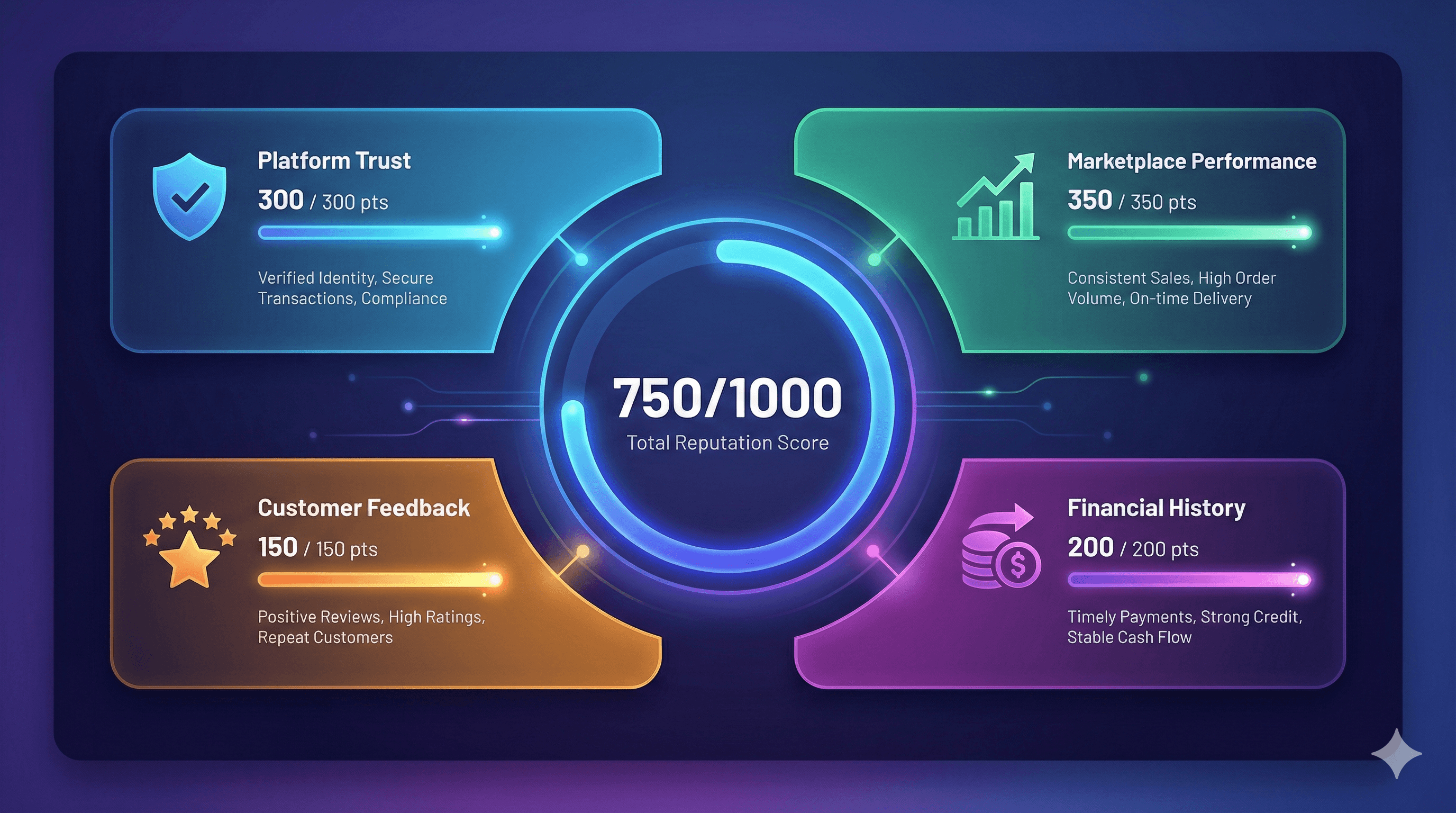
The reputation engine transforms intangible business credibility into quantifiable trust scores enabling investment decisions. System implements one thousand point model divided into four weighted components measuring different dimensions of business reliability.
Platform Trust with three hundred points maximum measures foundational platform engagement and verification status. Component assesses factors within user direct control: account completeness, identity verification, business registration documentation, and platform tenure. Scoring includes one hundred points for KYC completion, seventy five points for business registration documents, fifty points for bank account verification, and scales based on profile completeness and time since registration.
Marketplace Performance with three hundred fifty points maximum quantifies actual business execution through verifiable transaction data. Current implementation allows manual entry with admin verification while Phase 2 roadmap includes API connections to major Nigerian e-commerce platforms. Scoring framework includes monthly sales volume, order fulfillment rate, customer retention percentage, and inventory turnover rate.
Customer Feedback with one hundred fifty points maximum aggregates buyer experiences through ratings, reviews, and dispute resolution history. System weighs verified purchases more heavily than unverified reviews to prevent manipulation, tracking both positive signals like five star ratings and negative signals like refund requests.
Financial History with two hundred points maximum tracks payment reliability, profit reporting consistency, and credit behavior. Component grows over time as SMEs complete funding cycles, report profits accurately, and make payments on schedule. System rewards positive financial behaviors while penalizing defaults or late payments.
New businesses start with zero financial history points, naturally limiting initial investment attractiveness. However, as they successfully complete funding cycles and demonstrate reliability, this component becomes strongest differentiator. Agent sponsorship provides trust boost of one hundred fifty to two hundred points for Human Trust pathway participants, enabling marketplace visibility despite lacking transaction history.
Smart Contract Implementation
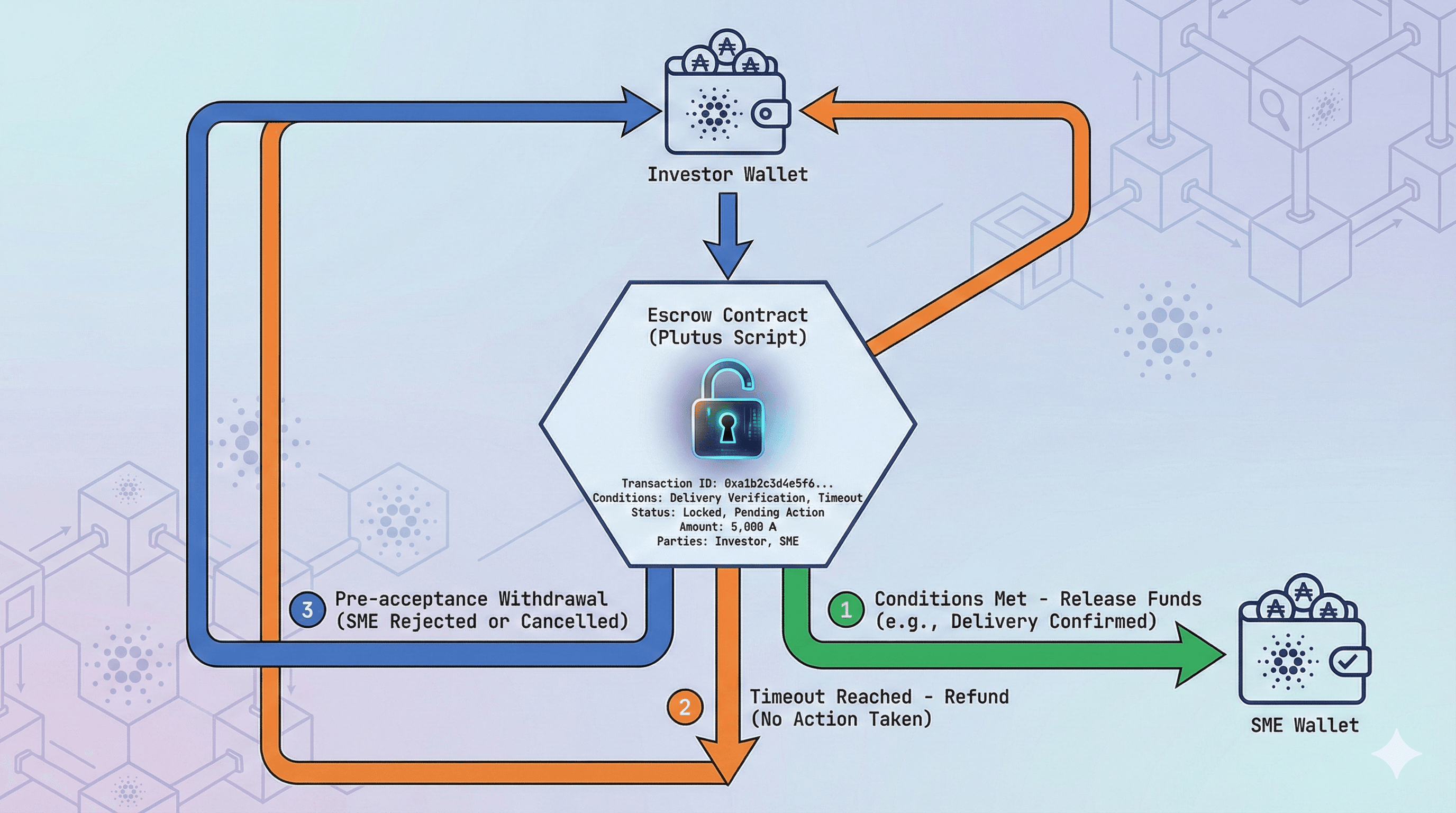
Investment escrow smart contracts written in Aiken manage on chain custody of ADA and USDM investments. Contract logic implements time locked escrow pattern where investor funds lock on chain until either SME meets funding conditions triggering release or timeout period expires enabling investor refund.
The escrow datum stores investment metadata: investor public key hash, SME public key hash, funding request identifier, investment amount, and unlock conditions. Contract validator enforces rules: funds can only release to SME if signed by authorized admin confirming funding request approval, or funds can refund to investor if timeout period passes without approval, or investor can withdraw before SME acceptance.
Transaction construction uses Lucid library building proper UTXO inputs, outputs, and redeemer structures. Frontend applications guide users through wallet signing process, handling transaction submission and confirmation tracking. Backend monitors blockchain for transaction confirmations, updating database records when on chain events complete.
Current implementation operates on Cardano preprod testnet with mainnet deployment planned after additional security audits and stress testing. Smart contract code undergoes formal verification ensuring mathematical correctness of validator logic before production deployment.
Security and Compliance Architecture
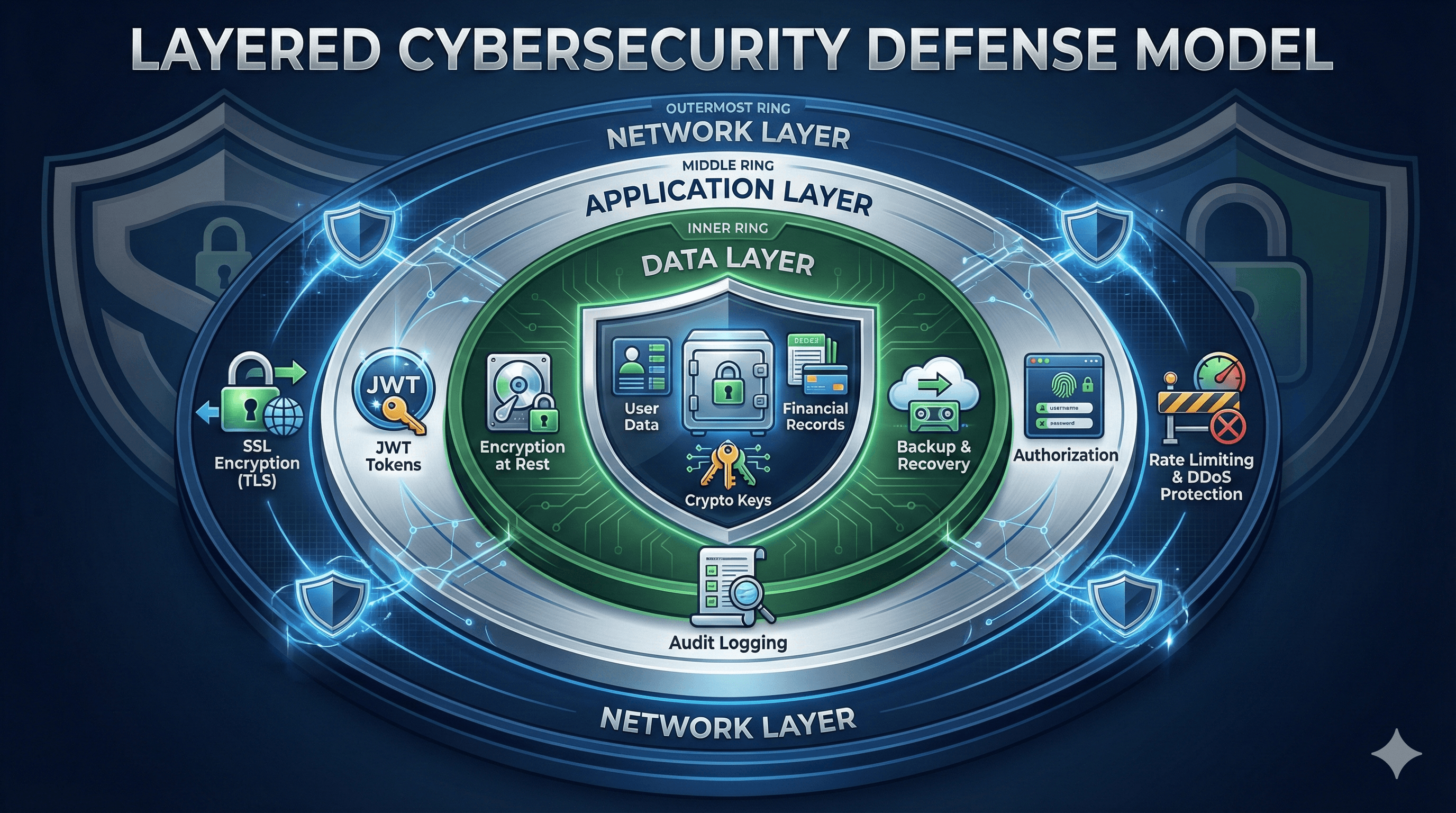
Platform security implements multiple layers protecting user data, financial assets, and system integrity. Authentication uses JWT tokens with secure httpOnly cookies preventing XSS attacks. Password hashing employs bcrypt with appropriate work factor ensuring credential security even if database compromises occur. Role based access control enforces least privilege principle where users access only resources appropriate to their role.
Database connections use SSL encryption preventing man in the middle attacks. API rate limiting protects against denial of service attempts and brute force attacks. Input validation and sanitization prevents SQL injection and cross site scripting vulnerabilities. File uploads undergo virus scanning and format validation before storage.
KYC verification integrates with third party identity verification services ensuring compliance with financial regulations. User data storage follows data protection principles with encryption at rest and transit. Platform implements audit logging tracking all financial transactions, permission changes, and administrative actions for regulatory compliance and forensic analysis.
Current Implementation Status
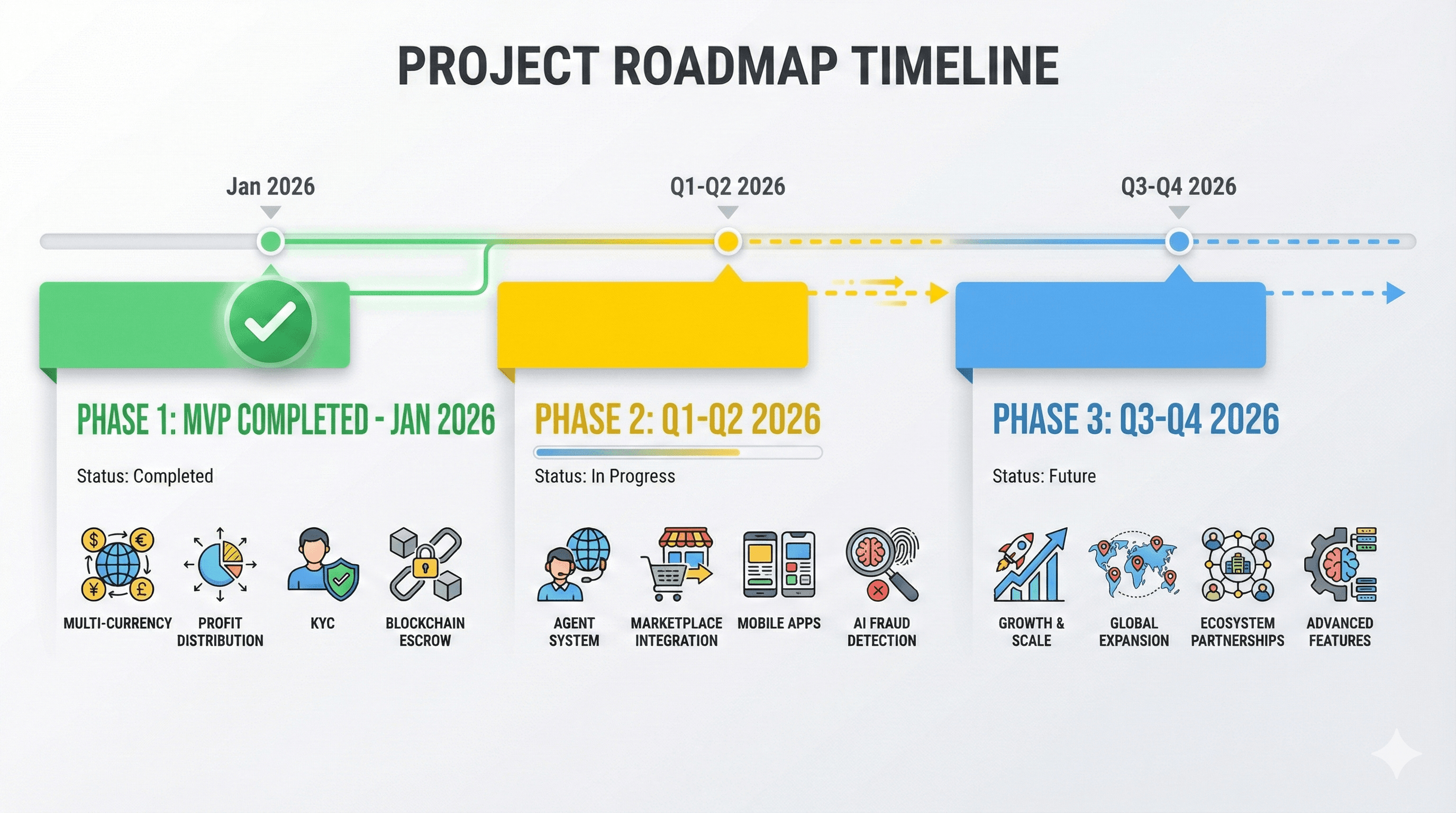
As of January 2026, Catalyst has completed Phase 1 MVP with functional multi currency investment capabilities, automated profit distribution, KYC verification workflows, and blockchain escrow integration. System has processed test investments across Nigerian Naira, Cardano ADA, and USDM stablecoin with successful on chain transactions and accurate profit calculations.
Phase 2 development focuses on full Agent sponsorship system implementation, integrated e-commerce marketplace connections for Performance Trust pathway, mobile applications for iOS and Android, and advanced fraud detection powered by artificial intelligence.
The platform demonstrates that trust infrastructure enabling fair lending markets is technically feasible, economically sustainable through proven unit economics, and aligned with regenerative principles building wealth rather than extracting it from vulnerable communities.
For a deeper understanding of our development process, challenges overcome, and lessons learned, see our complete hackathon journey. To explore how we arrived at this solution through systematic research and analysis, review our ground truth findings, insight formulation, hypothesis development, and opportunity definition.
Project Resources
Complete technical documentation available at official documentation site covering database schema design, API endpoint specifications, smart contract implementation details, deployment procedures, and development guides for contributors.
- Live Platform: https://catalyst-landing-page-rho.vercel.app/
- Complete Documentation: https://catalyst-wine.vercel.app/documentation
- Video Demo: https://youtu.be/OFdy6mkUasg
- Pitch Deck: https://drive.google.com/file/d/1RgOXPNDD3sHm8S7g0xSU0pKO7vvdpgqucRg4kpO0WcY/view
Back to: Team Catalyst Overview